Shinichi Nakagawa
Email: snakagaw(-at-)ualberta(-dot-)ca Shinichi is a Professor of Evolutionary Biology & Synthesis at the University of Alberta |
|
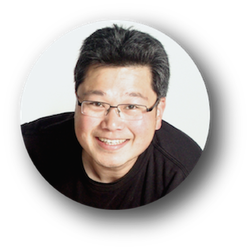
I was born in Nagano and brought up in Saitama, Japan. After turning 21, I went to New Zealand to see penguins. I did BSc (Hons) at the University of Waikato, New Zealand (2003) and PhD at the University of Sheffield, United Kingdom (2007). After a brief postdoc period, I got a job as lecturer at the University of Otago (2008). In 2015, I moved to UNSW, Sydney and from 2024, I am the Canada Excellence Research Chair (CERC) in Open Science and Synthesis in Ecology and Evolution at the University of Alberta. I love sleeping a lot during weekends and watching Japanese cartoons.
Research Interests
My research interests are very diverse but usually fall into three categories: 1) Research Synthesis, 2) Meta-science and 3) Methodological Development (mainly statistical methods but also including other methods). My main model organisms have primarily been birds (sparrows, dunnocks and penguins), but I have also worked with earthworms, amphipods, frogs and fish (to be honest, I prefer eating, rather than studying, the last model system). Between 2015-2020, our main experimental model was zebrafish and 2021-2023, our main system was fruit flies. After the COVID, I decided to focus on research synthesis (e.g., meta-analyses, big data analyses) and meta-science.
Past Work / Education
I used to study too hard during my days in Japan and I burnt out and wanted to escape. Then, New Zealand seemed to be a great place; they have penguins! Subsequently, I was very fortunate to do my BSc degree with Honours in Psychology and Biology at the University of Waikato, Hamilton, NZ under the supervision of Prof Joe Waas (Biological Sciences) and Prof Mary Foster (Psychology). Joe basically taught me how to write in English (before that I was only able to write in Japanese). During my honour’s time, I did several projects: 1) kin recognition in little penguins on Tiritiri Matagi Island, 2) testing a hormonal assay with Adelie penguins in Antarctica, and 3) studying memory of chickens in a happy lab. Then, I went to the UK to do a PhD at the University of Sheffield under the supervision of Prof Ben Hatchwell and Prof Terry Burke (the best supervisor team for a PhD). For my PhD, I have been studying parental care in relation to male ornamentation (the badge of status) in house sparrows on Lundy Island. I carried on working with Lundy sparrows for a year as a postdoc. Then NZ claimed me back in 2008. After 7 years at the University of Otago, I am now at the Evolution & Ecology Research Centre (E&ERC) and the School of Biological, Earth and Environmental Sciences (BEES) at the UNSW, Sydney. I was there till 2024. Now, I head COSSEE at the University of Alberta.
Current Research / Work
At COSSEE I lead a Canada Excellence Research Chair program on Open Science and Sythesis in Ecology and Evolution. The central aim is simple but ambitious: to make ecological and evolutionary research more trustworthy, efficient, and reusable by combining research synthesis, meta-science, open workflows, and new statistical/AI tools.
Our work is organised around four interconnected strands (many in progress and others under preparation):
1. Mapping and “living” syntheses of ecology and evolution
We are building the first systematic, continuously updated overview of evolutionary ecology. Using research weaving (combining systematic maps with bibliometrics), we map where evidence is dense, where the gaps are, and how ideas and researchers are connected. We are also developing “living” syntheses: online, continuously updated systematic reviews and meta-analyses, starting with topics such as natural selection in the wild. These projects are designed as open synthesis communities, where empiricists and synthesists contribute data, code, and curation, and are recognised through contributorship.
2. Quantifying and validating replicability in ecology and evolution
Ecology and evolution rarely allow simple, direct replications, but they still need reliable, testable evidence. We will try to assess the replicability of key empirical studies and meta-analyses in evolutionary ecology, creating a “reliability map” of the field. We then put these predictions to the test via DEAR (Dual Education And Research) workshops, where international early-career researchers and topic experts jointly re-run and update influential meta-analyses. This work both improves the underlying evidence and trains a global cohort of researchers in rigorous research synthesis.
3. Building open, AI-assisted infrastructure for evidence synthesis
A major part of the program is to create the infrastructure that makes good practice the easy default. With computer and data scientists, we are:
These tools are designed to be open, reusable, and field-agnostic, so they can support not only ecology and evolution but also environmental, social, and biomedical syntheses.
4. New variance-aware methods and “data recycling”
Traditional meta-analyses focus almost exclusively on mean differences. My group works on variance-aware and “data recycling” methods that exploit much richer aspects of data:
This variance- and distribution-aware perspective underpins much of COSSEE's work, linking meta-science (how we do research) with evolutionary and ecological theory (what we infer from it).
Other Interests
I like cooking nice food and eating it with nice people (it is even nicer if my mum cooks the food, but she cannot visit me too often). I enjoy holding ‘Temaki’ (do-it-yourself; DIY) sushi parties. Also, I love going to hot springs (shame, there are not many of them in Australia so I miss Japan where there are literally hundreds of onsen almost everywhere). In Sydney, with my two boys and wife, we have been explored the city and the neighbourhoods (e.g zoo, museums, parks). Sometimes, I like vegging out and watching Japanese cartoons – my favourite movie is “My Neighbour Totoro”.
Publications
See the Publications page for the list of my peer-reviewed articles and other contributions.
Editorial Work
Research Interests
My research interests are very diverse but usually fall into three categories: 1) Research Synthesis, 2) Meta-science and 3) Methodological Development (mainly statistical methods but also including other methods). My main model organisms have primarily been birds (sparrows, dunnocks and penguins), but I have also worked with earthworms, amphipods, frogs and fish (to be honest, I prefer eating, rather than studying, the last model system). Between 2015-2020, our main experimental model was zebrafish and 2021-2023, our main system was fruit flies. After the COVID, I decided to focus on research synthesis (e.g., meta-analyses, big data analyses) and meta-science.
Past Work / Education
I used to study too hard during my days in Japan and I burnt out and wanted to escape. Then, New Zealand seemed to be a great place; they have penguins! Subsequently, I was very fortunate to do my BSc degree with Honours in Psychology and Biology at the University of Waikato, Hamilton, NZ under the supervision of Prof Joe Waas (Biological Sciences) and Prof Mary Foster (Psychology). Joe basically taught me how to write in English (before that I was only able to write in Japanese). During my honour’s time, I did several projects: 1) kin recognition in little penguins on Tiritiri Matagi Island, 2) testing a hormonal assay with Adelie penguins in Antarctica, and 3) studying memory of chickens in a happy lab. Then, I went to the UK to do a PhD at the University of Sheffield under the supervision of Prof Ben Hatchwell and Prof Terry Burke (the best supervisor team for a PhD). For my PhD, I have been studying parental care in relation to male ornamentation (the badge of status) in house sparrows on Lundy Island. I carried on working with Lundy sparrows for a year as a postdoc. Then NZ claimed me back in 2008. After 7 years at the University of Otago, I am now at the Evolution & Ecology Research Centre (E&ERC) and the School of Biological, Earth and Environmental Sciences (BEES) at the UNSW, Sydney. I was there till 2024. Now, I head COSSEE at the University of Alberta.
Current Research / Work
At COSSEE I lead a Canada Excellence Research Chair program on Open Science and Sythesis in Ecology and Evolution. The central aim is simple but ambitious: to make ecological and evolutionary research more trustworthy, efficient, and reusable by combining research synthesis, meta-science, open workflows, and new statistical/AI tools.
Our work is organised around four interconnected strands (many in progress and others under preparation):
1. Mapping and “living” syntheses of ecology and evolution
We are building the first systematic, continuously updated overview of evolutionary ecology. Using research weaving (combining systematic maps with bibliometrics), we map where evidence is dense, where the gaps are, and how ideas and researchers are connected. We are also developing “living” syntheses: online, continuously updated systematic reviews and meta-analyses, starting with topics such as natural selection in the wild. These projects are designed as open synthesis communities, where empiricists and synthesists contribute data, code, and curation, and are recognised through contributorship.
2. Quantifying and validating replicability in ecology and evolution
Ecology and evolution rarely allow simple, direct replications, but they still need reliable, testable evidence. We will try to assess the replicability of key empirical studies and meta-analyses in evolutionary ecology, creating a “reliability map” of the field. We then put these predictions to the test via DEAR (Dual Education And Research) workshops, where international early-career researchers and topic experts jointly re-run and update influential meta-analyses. This work both improves the underlying evidence and trains a global cohort of researchers in rigorous research synthesis.
3. Building open, AI-assisted infrastructure for evidence synthesis
A major part of the program is to create the infrastructure that makes good practice the easy default. With computer and data scientists, we are:
- Developing AI-assisted, semi-automated pipelines for screening, classifying, and extracting data from the literature, enabling scalable living reviews and maps;
- Implementing research weaving tools and interactive dashboards to visualise evidence and collaboration networks;
- Building EcoEvo-specific pre-registration infrastructure that lowers the barrier to registration by allowing aims, design, and analyses to be registered in stages. with collaboration with Dr Antica Culina and her team;
- Co-creating community-driven and dynamic guidelines and best-practice documents (e.g. extending work like PRISMA-EcoEvo) so that reporting, updating, and assessing reviews become more standardised and transparent.
These tools are designed to be open, reusable, and field-agnostic, so they can support not only ecology and evolution but also environmental, social, and biomedical syntheses.
4. New variance-aware methods and “data recycling”
Traditional meta-analyses focus almost exclusively on mean differences. My group works on variance-aware and “data recycling” methods that exploit much richer aspects of data:
- Developing new effect sizes and meta-analytic methods for comparing variance, covariance, skewness, and kurtosis between groups (e.g. females vs males, treatment vs control);
- Using individual-participant data meta-analysis (IPD) and large databases (such as long-term bird datasets and high-dimensional mouse phenotyping data) to ask questions about sex differences, distributional shape, comorbidity, and rare/extreme outcomes;
- Creating robust methods for meta-meta-analysis (2nd-order meta-analysis) to synthesise results across many meta-analyses, including those on sex/gender differences and global change impacts.
This variance- and distribution-aware perspective underpins much of COSSEE's work, linking meta-science (how we do research) with evolutionary and ecological theory (what we infer from it).
Other Interests
I like cooking nice food and eating it with nice people (it is even nicer if my mum cooks the food, but she cannot visit me too often). I enjoy holding ‘Temaki’ (do-it-yourself; DIY) sushi parties. Also, I love going to hot springs (shame, there are not many of them in Australia so I miss Japan where there are literally hundreds of onsen almost everywhere). In Sydney, with my two boys and wife, we have been explored the city and the neighbourhoods (e.g zoo, museums, parks). Sometimes, I like vegging out and watching Japanese cartoons – my favourite movie is “My Neighbour Totoro”.
Publications
See the Publications page for the list of my peer-reviewed articles and other contributions.
Editorial Work
- Guest Editor, Environmental International (2024-2025)
- Senior Editor, Biological Reviews (2021-...)
- Associate Editor, Ecology Letters (2018-2023)
- Associate Editor, iScience (2018-...)
- Associate Editor, BMC Biology (2015-...)
- Board of Reviewing Editors, Environmental Epigenetics (2015-2023)
- Associate Editor, Methods in Ecology and Evolution (2013-2015)
- Editorial Board, Biological Reviews (2012-2021)
- Editor, Behavioral Ecology (2012-2016)
- Board of Reviewing Editors, Journal of Evolutionary Biology (2011-2014)
- Associate Editor, Evolutionary Ecology (2011-2014)
- Associate Editor, Emu: Austral Ornithology (2011-2014)
- Advisory Editorial Board, Ethology (2010-...)